Monday, December 19, 2005

A Christmas Story in Tokyo


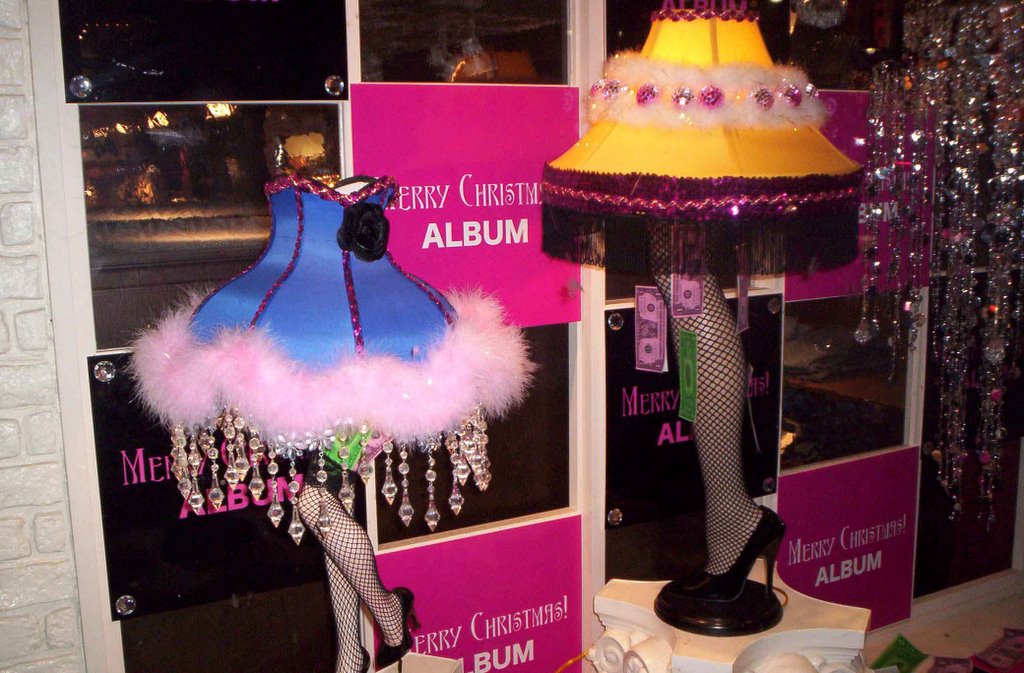
Strolling down the street in Shibuya one evening after eating a very tasty Thanksgiving dinner, I couldn't believe my eyes! Each year I watch A Christmas Story with my family, and we always laugh at the lamp the father buys himself for Christmas. Well, here are two of them, right here in Tokyo! What a fun place Shibuya is. It never disappoints!

Unexpected honor


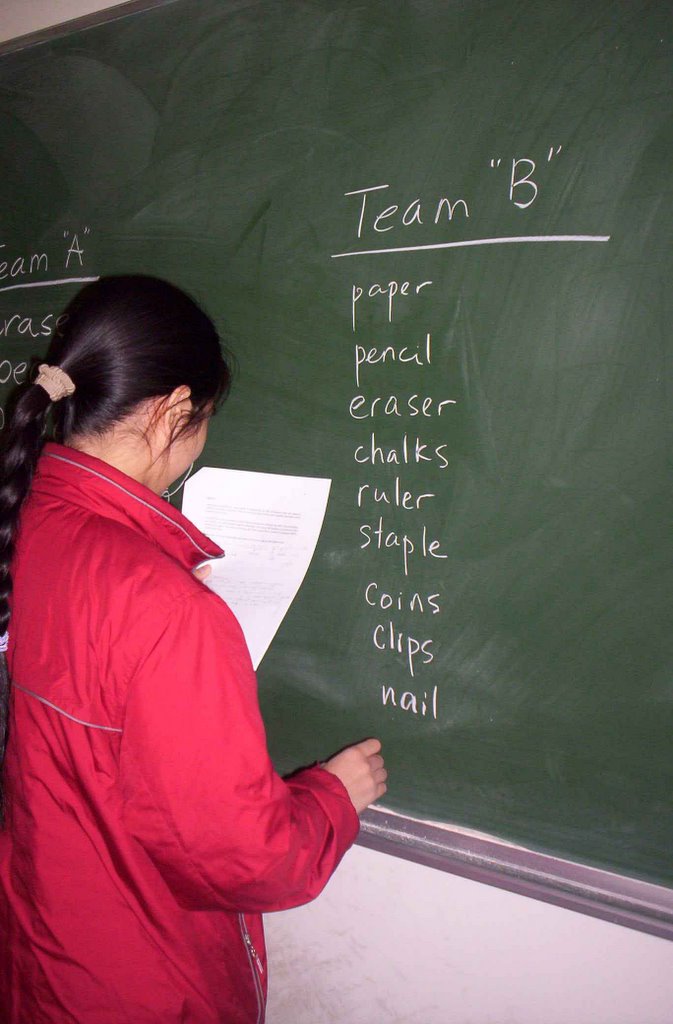
Last week my three classes at a prestigious university here in Tokyo ended. They were small classes of third-year students and, over the semester, we began to feel comfortable with each other. Each week students had to get up in front of the class to speak spontaneously and problem-solve a particular case study or article they had just read. It would be tough enough for a native English speaker to do this, but these students were speaking English as a second language.

Each week the students worked together in groups and got to know each other a little. At the same time, I got to know them a little. After each presentation, I congratulated them on their courage, and encouraged them to keep practicing their English, even after graduation.

At the end of their final presentations, I again congratulated them on their hard work and wished them well on their life's journey. I told them how much I had enjoyed teaching them, and how honored I was to have known them—even for this brief time.

When I was finished, my entire class rose to give me a standing ovation.

That's when I knew, for the first time, that I really was a teacher. I almost cried.

Up close and personal


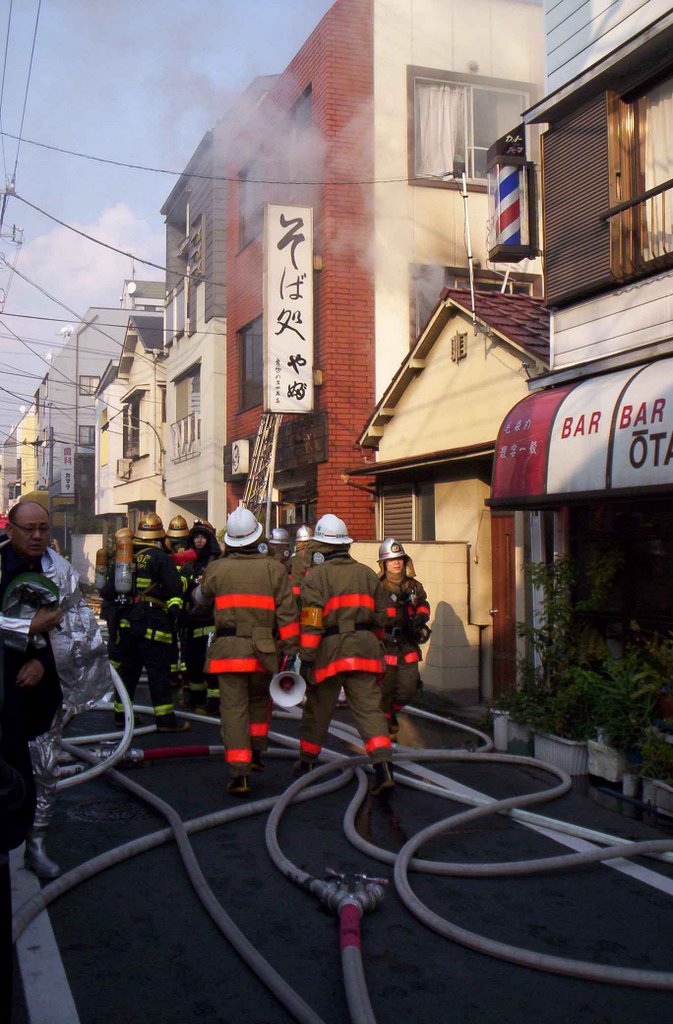
There was a fire about two blocks from my house and I managed to get some pictures and videos. Apparently, it started in the small restaurant downstairs and spread to the apartments up above. When I got there, firemen were running everywhere, and a couple of people were being loaded into an ambulance with smoke inhalation. I heard that a man had jumped from the upstairs window and was slightly hurt, but didn't see him.

So many alarms were sounded that I thought it was Armageddon! I suppose with houses and businesses built so close together it wouldn't take much to raze an entire city.

Hot tea. . .and some Vitamin Love

Got a good chuckle from one of my students recently. We were studying from the chapter on health, which included giving and asking for advice regarding health matters, and talking about home remedies.

Here sat a shy, 40-something businessman, married with a couple of kids. Since our teaching method always includes role plays, I said we would do a role play where he was sick, and I would pretend to be his wife and offer him some home remedies.

Me: You look terrible. What's wrong?
Him: I have a terrible cold and a fever.
Me: Can I bring you some hot tea with lemon?
Him: Yes, that would be nice. Thank you.
Me: Do you need anything else?
Him: Yes (with a big, silly grin). Some Vitamin Love.

We both laughed so hard we could barely finish the lesson. Who said Japanese can't be funny?

Sunday, December 18, 2005

A plain, brown paper wrapper

One of the sights I've come to know and love around Tokyo comes in a plain, brown paper wrapper.

In America, we think of a plain, brown paper wrapper as something that might contain porn. I was suspicious the first time I saw it. Turns out that plain, brown paper wrappers adorn all books sold in Tokyo (and maybe all of Japan—I don't know for sure). The first time I bought a paperback book, the clerk quickly and skillfully folded a plain, brown paper jacket around it and dropped it into a paper bag, which was then dropped into a plastic bag. (Yes, the Japanese are into overkill when it comes to wrapping things!)

After giving this some thought, I realized that many Japanese read books on their daily train rides. While they may have to ride crowded trains, like sardines in tin cans, they apparently want to maintain their privacy when it comes to their reading tastes.

I've also noticed that the books are quite short—maybe only 100 pages or so. If you're an aspiring author who wants to write for Japanese consumption, you would do well to remember the K.I.S.S. rule. I don't see anyone here lugging around huge, 800-page books, no matter how popular they might be in America. Most Americans have cars and don't need to consider how much weight to put into a bag they have to haul around on a shoulder all day.

So, small books in plain, brown paper wrappers, are quite practical.

Now, if only something could be done about the businessmen who carry sleazy newspapers or magazines and insist on reading them in front of everyone—children and old ladies included. One time, in the middle of the afternoon, I saw a businessman sit with his sex-kittens newspaper folded for all to see as he read something on an inside page. A little boy around 7 or 8 years old jumped out of his seat and dashed over to the man, stood in front of him, bent down and had a good look at the newspaper. The man looked up and gave the boy a withering look. He reluctantly went back to his seat, but kept his eyes on the pictures of feminine delights in provocative poses.

Too bad that certain newspapers and magazines don't come in plain, brown paper wrappers.

Saturday, December 03, 2005

A matter of curiosity about the world

As I prepare to leave on vacation in 2-1/2 weeks, I can't help noticing some comments from a few students at our learning center. Thankfully, it's only from a few, but it still managed to leave me scratching my head.

This week I asked one young woman, a high school senior, about her extensive travels. She had gone on a two-week home stay in Australia this past September, but had no idea of the name of the city in which she had lived for two weeks! It wasn't a matter of just forgetting the name because of the different names in Japanese and English.

"Well," I said, "could it have been Sydney or Melbourne?"
"I have no idea," she replied.
"Do you remember any landmarks or sites?"
"No."
"What did you do while you were there?"
"Nothing," she replied. "I stayed in my room."

She truly had no interest whatsoever in where she stayed or what she did. I can only imagine how her host family must have felt!

This student traveled to several countries with her parents, yet resented every trip. When I asked her for something—anything—she might have enjoyed about her trip to London, she quickly answered with a smile, "Nothing." I said, "Nothing? Not one single thing?" "No," she said. "I hated all of it."

Even though this may have been a case of teenage rebellion against parents who try to control everything their children do, I found it quite puzzling and sad. Surprisingly, this same student speaks better English than most—including students and adults!

A few years ago some friends had a Japanese teenage girl stay with them for a month and she acted the same way. She stayed in her bedroom as much as possible—even taking her meals to her room to eat alone. When she had to travel to school each day in the car, she never said a word.

Another teacher told me about one of his adult students who said she had just returned from a 5-day trip to Paris. To his horror, she reported that she had sat in her hotel room for the entire five days because it was "too cold to go out."

On the other hand, fortunately, I had another student, a young business man, who told me all about his third trip to Africa where he stayed out in the bush and photographed wildlife. I could tell by the way he spoke how much Africa had impressed him. He was in love with it!

Wednesday, October 26, 2005

Unlearned lessons

Don't know why, but for some reason I decided to "google" about the Great Hanshin--Kobe--earthquake in 1995 and came across an interesting article by the Japan Policy Research Institute.

While somewhat shocking to read, it didn't come as a real surprise to know that Japan was so ill-equipped to handle such massive destruction. What's even more troubling is that I don't think Japan has learned from their past mishandling of that tragic event.

I'm guessing that Japan is no better than America when it comes to overstating their emergency preparedness. National pride, as well as a multi-layered bureaucracy, can be a country's greatest undoing. The recent hurricanes in Florida and Louisiana proved how difficult it is to handle a crisis of such magnitude. America's bureaucracy is daunting but Japan's is so multi-layered that in an emergency it would be like trying to move a mountain with a pair of chopsticks.

Here's an abbreviated listing of Japan's shortcomings in handling the Kobe earthquake:

1. Overconfidence in the ability to withstand earthquakes.

2. Lack of local preparedness for natural disasters.

3. Ineffectual crisis management in Tokyo.

4. Private companies appeared more able than the government to respond quickly and effectively to the victims' needs.

5. Reluctance to accept aid from abroad.

6. Differential treatment of foreigners.

7. Selective reporting by the mass media.

Yesterday one of the universities where I teach had an "Earthquake Emergency with Fire" drill. Students and staff were asked to use a cell phone call-in system to report their safety. None of my students, nor I, had been given any information about how to use the call-in system. Worse than that, the alarm never sounded in our building.

This was a prime example of how the multi-layered Japanese system will never be able to pull itself together to manage any kind of crisis, especially natural disasters. After the destructive earthquake in Niigata one year ago, it took the Japanese government nearly two weeks to get simple aid such as blankets and water to victims.

This happened despite the Kobe earthquake of 1995 with its supposed "lessons learned."

Sunday, October 23, 2005

Trains and more trains

Bored? Looking for some mindless recreation? OK, take a look here. Be sure to click on the "departing melody" for each train track. Japan loves these little jingles and thinks it gets people boarded faster if they hear "fast" music. Every time I hear it, my heart also races faster!

Saturday, October 22, 2005

Shake it up, baby

Over the past week we've been doing a whole lot 'a shakin'. Three fairly large earthquakes in fact, measuring 6.5 , 5.8. and 5.5 have occurred within one week. Fortunately, there was no real damage or serious injuries.

I've tried for months to convince my British boss that we should prepare some kind of earthquake plan at work--and volunteered to organize it--but he's reluctant. Turns out he's worried that once we have a plan in effect a large earthquake will inevitably happen. "This is called superstition", I told him.

So, a language school with 22 small classrooms, that teaches several hundred children and adults weekly, must rely on one child's "Earthquake Backpack" filled with one flashlight, some extra batteries, a small box of bandages, and a quart of water.

We have no call-in plan where teachers could call from wherever they happen to be to confirm their safety. We have no instructions about where to go for emergency shelters. We have no CPR or other emergency training. We have rooms and offices loaded to the gills with heavy objects that aren't fastened to the walls or secured in any way. We do, however, have some sort of apparatus in the third-floor teachers' lounge that's supposed to be a hoist to lower people out the window. No one knows how to use it. We've never had any kind of drill or training whatsoever so consider it somewhat worthless in an emergency where we might have to evacuate within minutes--or less.

Japanese seem intractable when it comes to facing the reality of an earthquake. The government makes an annual attempt to convince its citizens and businesses that they should prepare for an earthquake. The reality is that almost no one does.

Tuesday, August 30, 2005

Think pink

Everywhere I look, I'm seeing pink! Not just on women. That's a given since I would bet that more woman in Japan wear pink than in any other country. Pink shoes. Pink handbags. Pink t-shirts, blouses, skirts, sweaters, bows, and, yes, some of them carry pink dogs or dogs with pink clothing, bows, and toenails.

What has really astonished me, however, is seeing so many men wearing pink. I'm not just talking about the metrosexuals with their manga-style haircuts. Men of all ages are wearing pink. I just saw the Prime Minister, Junichiro Koizumi, wearing a pink shirt as he worked the crowd during his reelection campaign.

Male newscasters are wearing pink sports coats and pink ties. A significant number of my middle-aged male students come to Saturday classes wearing pink polo shirts.

I can't remember ever seeing more than a handful of men in America wearing pink, but maybe the craze has spread there this summer. American men seem to be too macho to feel comfortable wearing pink, I would think. There's also that whole thing about seeming, well, too swishy if you know what I mean. American men seem to worry about that. A lot.

So, am I out of touch with American men, or is this just a Japanese trend?

Monday, August 22, 2005

7.2 earthquake that does very little damage!

A little before noon on August 16, Tokyo shook from an earthquake of magnitude 7.2 that hit about 200 miles away. In Tokyo, even though buildings swayed side to side, it only measured about 5 on the Richter scale. However, it felt quite intense so I grabbed my cell phone and purse and ran from my house.

Amazingly, this earthquake did very little damage in Saitama Prefecture, its epicenter, located in northeastern Japan. Although some 80 people sustained injuries, no one was killed, and there was very little property damage. The worst damage was a collapsed ceiling at a newly-opened swimming center where most of the injuries occurred. There was also a collapsed house with an 80-year-old woman trapped inside who was pulled out uninjured.

The magnitude 7.4 Kobe earthquake in 1995 killed more than 6,400 people and did significant property damage when entire blocks burned to the ground.

Kanto Prefecture (Tokyo is one of its 23 wards) had a 6.0 earthquake on July 24. According to The Yomiuri Shimbun, the "Geographical Survey Institute said it rated the earthquake an 'A-level'--the highest alert level set by the administrative organization." Even so, no one was killed, and very little damage was sustained.

People in Saitama and Kanto Prefectures are feeling very lucky these days. Very lucky indeed.

How to swim upstream

I keep meaning to write in my blog at least weekly, but here it is, almost two months since my last entry. It's not because I can't find anything to write about. Japan, and especially Tokyo, are filled with millions of things to write about! If you lived here a lifetime, you still wouldn't run out of new observations and impressions.

A few days ago I taught a young businessman who was on his third job! By Japanese standards, this is almost unheard of. Despite a somewhat softening trend, employees are hired right out of college and almost always remain with one company until they retire. It's quite unusual to hear about three jobs by around the age of 32. So, I asked my student to explain his career path.

He, like almost all college graduates, was hired just before he graduated. He worked for that company for a few years until he decided he didn't enjoy the type of work he was doing anymore. He felt the need to get more training in a broader range within his field, so he left and joined a foreign company operating in Japan. There, he spent a few more years until he reached the same plateau with his skills. Unable to broaden his skill base while working at that company, he decided to make another move and joined yet another foreign company operating in Japan. Now, he's been with this company a few years, has exponentially broadened his skills, and expects to make yet another switch within the next two years.

Still stunned to hear about this, in a country that values loyalty above almost anything else, I asked him to explain how his employers feel about his "job hopping." Taking a big long breath and exhaling it slowly, he said, "That's why I always go to foreign companies. They understand the importance of broadening my skills. Now, I could never work for a Japanese company."

I asked him to tell me more about that. He said, "I would never fit in with the corporate culture. You must become a loyal member of the company, and because I have switched jobs, I could never be considered a loyal member."

I continued to prod him about that corporate culture, and to explain to me what that meant, especially regarding promotions. He told me that, in Japan, everyone is hired straight out of college at around the age of 22. He went to the whiteboard and drew an explanation of the way the system operates. At the bottom of the chart was the 22-year-old employee (or "member" as Japanese call themselves). Then he wrote "38" above that starting point. "This is the age," he said, "when you can be considered for a promotion to manager." Above that he wrote "48." "This is the age when you can be considered for director."

"Do you mean that age is the deciding factor for promotion?" I asked.

"Yes," he replied.

"What about merit? What if some guy, or gal, is a real hotshot or has an MBA? Does he or she still have to wait until age 38 to be considered for management."

"Yes."

So, this young man has decided to swim upstream, against the indoctrination of his culture which dictates that everyone swims together, side-by-side. He seems aware of his risks, but also feels that he can't go to a job everyday that he hates or that leaves his career stagnating. He's made a conscious decision to better himself, no matter what the risks.

That's why he's so intent on learning English. He knows that his survival depends on working for foreign companies. He accepts that he would never be hired by a Japanese company--even though he has bettered himself and his skills and could offer the company a truly determined and dedicated worker.

Tuesday, June 28, 2005

Suicide in Japan

Suicide in Japan has risen sharply since 1998 and now the government wants to conduct a five-year study costing 1 billion yen to see what can be done to treat depression. "The studies will focus on treatment for compulsive neurosis, as previous studies have revealed that most people who attempt suicide suffer from the disease."

As an outsider who has talked to hundreds of people, including business executives and high school and college students, I see a certain perspective that always makes me wonder how people cope in such an overcrowded, controlled society. I'm not a sociologist or a psychiatrist. or pretending to know to any depth what makes the Japanese tick, but I do wonder how people manage to live under such tight restrictions.

For example, I've had an opportunity to talk to a number of people about their workplaces, and have actually seen firsthand how they're set up. In most cases, the employees sit at desks without any cubicles, while their bosses sit at desks facing them, all in one big room. I've asked if this made them feel uncomfortable--to be watched every minute by their bosses. Usually they say "no" and wonder how it would be possible to "communicate freely" with their bosses if they weren't sitting so close. Some, however, say they feel tense and nervous all the time.

I've also talked to people about their level of satisfaction with their jobs, and get a shrug with a look of "what else can I expect?" Many of them talk about looking forward to the day they retire so they can "begin their lives."

In all sorts of advertising--from train posters to magazines to TV commercials to T-shirts--there seems to be a dominant theme of having a "happy life." There's so much focus on finding or experiencing a happy life that I'm left to wonder if Japanese lives are so entirely unhappy that they can only think about the day something happens to transform it into a happy life. Consumerism offers an immediate "fix" for millions, but it seems to leave people feeling even unhappier as they discover they can't buy whatever it is that will make them truly happy.

There's also the sense of isolation that Japanese feel, despite living with 120,000 million other people. Cell phones and text messaging seem to replace the intimacy of real conversation.

These are just my observations, and I suppose similar observations could be made in America, but for a nation that's so absorbed in putting a best face forward, it seems sad that so many of those faces belong to people who will kill themselves. Recently, quite a number of people have met in suicide chat rooms on the Internet. It seems strangely ironic that, while they had no friends they could talk to when they felt depressed, they were able to find other depressed people to meet up with for group suicides. Maybe in their last efforts to feel a part of something, they finally found companionship in the suicide pact to die together.

Global warming in Tokyo

It's not even July yet and already Tokyo has set a new highest-ever record as the temperature hit 36.2. For those who are "Celsius impaired," 36.2 translates to 97.16 F, but with the humidity factored in, it felt like 101. Way too hot for June! This doesn't bode well for the rest of summer.

Around the world temperatures are soaring, including in Europe. In 2003 there were over 30,000 deaths in Italy and France due to sustained high temperatures, and there's worry now that another catastrophic heat wave will claim more lives this summer.

Global warming is a reality, not "misguided science," and the U.S. is foolish and shortsighted to withdraw from the Kyoto Accords to reverse global warming. As a nation that uses more fossil fuel than any other country, and that dumps more chemicals into the atmosphere than anyone else, it seems only fitting that we should take more responsibility for cleaning up the mess.

Isn't it amazing how political coffers lined by big polluters' donations have the potential to kill millions of people around the planet? Where's the outrage?

Monday, April 18, 2005

Need some pampering?

For a long time I put off going to a hair salon because I didn't speak Japanese and worried about how I would communicate what I wanted. Then I had a student who was a hair colorist for a salon right next door, so she said she would help me explain what I wanted to a hair "artist."

From the minute I walked into the salon I was treated like royalty! There to greet me at the door were six or seven technicians, stylists, appointment staff, and a shampoo girl (sorry, I don't know what else to call her).

I sat down in the waiting area until both the (English student) colorist and the artist appeared. From there I proceeded to explain what kind of cut I desired, and the colorist interpreted to the artist. This went on for about 20 minutes and then I was led to a locker and dressing room area where I slipped on a gown and stashed my purse.

The shampoo girl took me to the shampoo area and began her magic. I don't know exactly what all was involved because I soon went into an altered state of bliss and comfort. While American shampoo bowls are cold and rigid, this bowl was soft and warm and comfortable. For the next twenty minutes or so I was treated to the best shampoo of my life!

Now, I've gone to upscale salons before, and have paid lots of money to have my makeup ruined by sloppy shampooing. I've also had my head banged against the sink, and variously scalded or iced with water that wasn't delivered at the right temperature. Most of these shampoos have lasted, maybe a minute or two, tops.

Not in Japan. Here a customer is treated to the ultimate luxury. I had a shampoo that was pure pampering, and included water delivered at a perfect temperature and several head massages with each lathering. Then my head was gently towel blotted and my hair combed out in the gentlest manner. There was no wet hair flipped onto my face or comb ripping my ears off.

As I paid for my haircut (around $50), again a bevy of salon workers lined up to bow and thank me for my business. In almost all shops, restaurants and salons, employees accompany the customer to the door (carrying any packages for them), and thank them for their business.

All this stands in stark contrast to what I'm used to in the U.S. I'm feeling very pampered in Tokyo!

Thursday, April 14, 2005

A view inside a Japanese man's head

Something's been troubling me about young, married Japanese men. Several times now I've had students who have told me "their wives were expecting" babies at any time. In the United States we've become used to the notion that both parents were expecting the arrival of their child. It's actually not such a big deal that culturally the Japanese still refer to only their wives expecting a baby.

What really has me scratching my head is how often I hear that the father-to-be isn't that involved with the birth of his child(ren). Usually I hear something like this:

Me: So, it must be getting really close to the time for your baby's birth?
Student: Yes, my wife's gone to stay with her parents. (Note: this is often a few hours away)
Me: You mean she's going to go through labor and have the baby without you?
Student: Yes, but I'll go see her on the weekend (presumably after she's had the baby).
Me: You won't be there for your baby's birth?
Student: (With a puzzled look on his face) No, her mother will go to the hospital with her.
Me: Wow! So you'll miss out on your baby's birth?
Student: (Another puzzled look) No, I'll see the baby probably over the weekend.
Me: Yeah, but you won't actually be there when it's born.
Student: No.
Me: Is that because your company won't let you take time off to be with your wife when she's giving birth?
Student: (Yet another puzzled look with a very long "ehhhhhhhhhhh?")
Me: You know, time to be with your wife during the birth and a few days after to help take care of her and the baby?
Student: Well, I could probably take time off from work, but I don't really need to do that because her mother will take care of her and the baby.

Apparently Japan has never heard of the Family Leave Act which allows both new parents to spend time together adjusting to their new life with their baby.

Last night I had another student, a mature business man in his late 40s or early 50s who wanted what's called "free conversation," where we can talk about anything instead of having a regular lesson. We talked about all sorts of topics. Then I happened to bring up the topic of "what is the most exciting thing that every happened to you?" He told me about a time when he was a teenager and got into a fight where his nose was broken.

I told him I was really thinking of something wonderful that had happened, "You know," I said, "like when your children were born." Again, I saw that same strange look come across his face. He was puzzled. I asked him if he was present when his children were born (they're 14 and 5), and he told me the most amazing thing.

"In Japan, to see a woman screaming 'gaaaaaaaaaahhhh' and giving birth, with all that blood and nakedness, destroys a marriage," he said.

"What do you mean by that?" I asked.

"It ruins it for a man," he said.

Still not understanding, I pressed him for more information.

"You never think of your wife as the beautiful woman that you married once you see her that way."

Apparently to validate his story, and to address the stricken expression that must have been on my face, he said, "It's true! There's been a survey that says almost all men who see such a thing later divorce their wives."

The bell rang and class was over.

Friday, February 11, 2005

Weddings Japanese style

Right this very minute, I should be dressed in my finest party duds and celebrating a friend's wedding. I had planned to go to the party--to what would have been my first almost all-Japanese social event. In fact, I had bought a cute little black velvet jacket for the occasion and had figured out what else I would wear with it. My only worry was that I didn't have a warm dressy coat to wear for these bone-chilling, windy evenings.

Then last Monday I casually mentioned to another friend that I was going to a wedding party Friday night. Her eyebrows shot up and she said, "So, you're paying 30,000 yen ($300)?" For a moment, I wondered if I had heard her correctly. Thirty-thousand yen? Granted, I'm decimal-point-impaired, and I've had difficulty sometimes figuring the exchange rate in my head. When I first heard about the party, in my mind I was thinking 3,000 yen ($30), which I thought was fine, even though I've never experienced having to pay to attend a wedding party. In the United States, weddings aren't done that way--at least as far as I know.

When I realized I would have to pay so much money to go to a party for a person I barely knew, I decided that I should reconsider my acceptance, but it wasn't easy. What should I say? Should I tell the truth--that I couldn't afford to pay 30,000 yen--or make up some other excuse? In the end, I decided that I could decline without having to make up a story or give the exact reason. I simply said, "I'm so sorry, but I won't be able to attend your wedding party after all." I didn't elaborate or dig a hole.

While I was extremely honored to have been invited to an almost entirely Japanese party, and looked forward to an opportunity to "see Japan from the inside," I was enormously disappointed that I couldn't attend.

Since Monday, I've discovered that wedding parties have more than one purpose. While they're meant to be a celebration of the wedding, they're also a means for paying for the wedding. As each guest pays the equivalent of $300 to $500, they're helping to defray the costs of the actual wedding. From what I understand, gifts are usually modest because of the high cost of attending the party.

So, while I'm sitting at home in my jammies, there's a wonderful party taking place right this minute that's celebrating the union of a man and a woman in matrimony, and I wish I could be there.

But most of all, I wish Mayuko and her husband a long and joyful life together.

Lumps in the night

For two weeks I've been apartment-sitting for a friend while she's in Singapore and New Zealand. She has two mischievous cats who sleep all day and are quite refreshed by the time I get home around 10pm. That's about the time they start chasing each other around the small apartment--skidding off tables and counters, "cat"-apulting off bookcases, and banging into anything in their path. This usually goes on until around 2am!

The past two years I've been cat-less, for the first time in my life. Even though I love dogs and all creatures, cats hold a special place in my heart. There's just something about their sleek, feline bodies and conniving little minds. . .

Last night I got home around 11:30 and was ready for bed an hour later. As I unfolded the futon and collapsed into the warm down comforter, I laid my head down on the little pillow and felt a hard lump. Lately I've taken to covering the pillow with a small towel to protect it from. . .well. . .cat bottoms. I had forgotten the towel was still there. Without turning on the light, I stuck my hand under it to see what was making the lump and felt something soft and furry. Zelda, the ocicat, had parked her toy mouse there.

I know it was Zelda because that's her kind of humor. She was probably sitting a cat's-tail-length away, waiting for the scenario to unfold, chuckling gleefully to herself as she awaited my reaction.

All her brother Hootie could manage was a disgusted "harrumph" at her cunning ploy for attention.

A baby stroller and a changing table

At first I thought it was strange to see the baby stroller parked by the curb. This is a residential neighborhood with no shops nearby. Yet day after day for almost a week, there it stayed. It wouldn't have been so perplexing if it hadn't been such a new-looking stroller. There was a cheerful cushioned liner to tenderly enfold an infant or toddler, and a matching protective hood hovered above the seat like a celestial ring of Cherubim. What caught my eye was that it appeared never to have been used. Then it was gone.

A day or two later, an equally new-looking wicker baby changing table appeared at the same curb where the stroller had once stood. It was outfitted in, yet again, a luxuriously thick mat. It would have made any baby happy to be changed and dressed on such a lovely table. Below the changing area were two open shelves displaying a matching fabric liner. After a few days, the matching mat and shelf liners disappeared, but the table remains.

If I were teaching a creative writing class, I would ask my students to imagine the story that went with these discarded items. Day after day, I looked at the stroller and changing table. What would prompt someone to set them out by the curb? In Japan, that's where people set their trash, but these were not put in the specified trash area. No, they were set there for someone to claim. But why? Was there no one this individual knew who could have used these two beautiful items? All young couples seem to know other expectant parents. Were they tainted in a way that made them unwanted? Is it possible that the joy of having a newborn was crushed by its tragic death?

I'll never know the answers to these questions.

Thursday, January 20, 2005

Weekend warriors

It's easy to see how quite a few people spent the holidays: hurting themselves, probably on the ski slopes. While it's rare to see anyone using crutches in Tokyo, lately I've seen quite a few young guys, and a few girls as well, hobbling along on them. From conversations with some of my students, it sounds like skiing is a once-a-year "hobby" for a lot of them. In other words, they hit the slopes once during the winter, and that earns them their "ski badge." I wonder if those who were injured ever go back to the slopes.

Domino effect

The funniest thing happened yesterday. Well, maybe not for the guy it happened to, but I was bent in half laughing as I watched the event unfold.

As I went through the train station ticket gate and exited the station, I looked up just in time to watch a young guy park his bicycle in the middle of what must have been 100 bicycles. Just as he turned to walk away, he apparently bumped one of the bikes. . .and the domino effect began. One by one, to the guy's horror, bikes began to fall. It all happened so fast that I didn't have time to whip out my new digital camera and take a movie, but the movie's still running in my head.

Amazingly, nobody else seemed to pay any attention. In Japan, people try to avoid embarrassing themselves or others, and I've learned not to offer help, so I just walked away (laughing on the inside).

Sunday, January 16, 2005

10-year anniversary of Kobe earthquake

Today marked the 10th anniversary of the "Great Hanshin" earthquake that hit Kobe, Japan on January 17, 1995 at 5:46 a.m. Over 6,400 lives were lost, and countless others affected by the 7.3 quake that leveled much of Kobe.

In solemn ceremonies under rainy, wintry skies, people huddled under umbrellas to light candles for each of those who died. It was a particularly difficult anniversary because of its close proximity to the Indian Ocean tsunami that snuffed out so many lives December 26. People here have been transfixed on that disaster, and feel a compelling need to ensure that such a devastating loss of life never occurs again. This milestone anniversary comes on the heels of that enormous tragedy, and the Japanese psyche is resonating with anguish.

Seattle and Kobe have been sister cities for 48 years. In the Seattle Times today:
Yesterday, at exactly 12:46 p.m., 60 people gathered beneath a cherry tree at Seattle Center to mark the 10th anniversary — to the minute — of the 7.3-magnitude earthquake in Kobe, Japan, that killed 6,433 people. . . At the moment of the anniversary, the crowd lit candles and bowed heads for a minute of silence. Then, led by Seattle Mayor Greg Nickels, each person lined up to ring the bronze 600-pound Kobe Bell, a 1962 World's Fair gift from Kobe to Seattle.
Shortly after the Kobe quake in 1995, nearly 3,000 people came to ring the bell in memory of the dead. The bell rang once for each life lost, and the service lasted for four days.

Even though I don't understand or speak Japanese, I have watched the constant stream of news stories on TV about both the tsunami and Kobe disasters. There have been so many feature stories showing the Kobe aftermath, and it's not hard to imagine the loss of so many lives when so many blocks of businesses, homes and apartments either burned to the ground or collapsed entirely. It must have been a terrifying scene to see firsthand. One of the teachers at work was living in Kobe when the earthquake struck, but fortunately for her, she made it out alive. She said it all felt surreal, and that time seemed to stop for a few moments until she realized what had just happened.

Japan is one of the most active earthquake zones in the world, and there will unquestionably be more earthquakes. Despite that fact, since moving to Japan I've noticed an overall sense of denial about it happening again--that is, until the December tsunami. Maybe that horrific tragedy will prompt Japan to finally work out a viable disaster plan. They need to get better prepared, as the Niigata earthquake in October proved. It took an achingly long time before supplies reached the victims of that earthquake. They were without blankets, food, and shelter for way too many days and weeks. Many families had to live inside their cars, and one-third of those people developed life-threatening blood clots.

It seems that lessons should have been learned from the Kobe earthquake in 1995, but Niigata proved that it's still a situation where the government is ill-prepared to handle such an emergency. Lives are unnecessarily lost when survivors are not reached in time to save them. The government needs more provisions, better planning, and the ability to move quickly in such events. Every minute counts. Every life is precious. How many more earthquakes will it take before Japan is able to respond immediately?

While Japan is on the leading edge for its tsunami early-warning system, not all earthquakes produce tsunami's. It's imperative that disaster preparations are firmly in place so that when an earthquake hits, the government is ready to act in an instant. There needs to be a full-force campaign to get people ready for the next earthquake. Denial time is over.

Friday, December 31, 2004

2005: Seeing with new eyes

I can't believe almost two weeks of my vacation have passed already. The time goes by so quickly! It doesn't seem possible that I'll be going back to Japan in another week. Sometimes I feel lost between two worlds--belonging to neither one. Coming back to the U.S. has made me see with new eyes, and I'm shocked at what I see.

One of the things I see everywhere is obesity. It's staggering! There are so many really, really overweight people, including very young children. Despite all the so-called "low fat" foods and "diet" soft drinks, people are growing bigger and bigger. My own weight had been creeping up for years, even though I eat a healthy diet of fresh vegetables and fish. I blamed my weight gain on too little exercise, which probably was correct since I've lost weight in Japan. All my slacks were suddenly too big and I've had to have them altered. I walk quite a bit now and have more stamina.

The other thing I noticed when I returned to the States is the sheer excess of purchases. Walk into any CostCo or Wal-Mart and see the enormous shopping carts overflowing with goods. This isn't to say that the Japanese wouldn't love to buy even more things, but it's much more difficult to carry things home if you're walking or using the trains. You learn quickly to buy only what you can carry. And another thing, most Japanese houses or apartments are too small to store a lot of extra stuff.

I've felt lost without a car here, and miss the convenience of the trains in Japan. It's a love/hate relationship with them since at times the trains are too crowded, but at other times I feel such relief that they're so available. They make it easy to get around, no matter where you need to go.

In the U.S., people are clogging the highways in their one-person-to-a-car travel, but in most cities around the nation, there's no other choice. Mass transit, except for bus stops that all seem to be located too far away from most neighborhoods, is pathetic in such a rich, industrialized nation. No wonder so many elderly people feel so isolated. How can they maintain an independent lifestyle when they're unable to drive? How can they get to the doctor or, for that matter, the supermarket, when they don't have a car? America is such a strange place, where the government assumes that everyone has the means to be independent. The reality is that there are many millions of people who have no access to public services, even though they need them desperately. In Seattle there's been talk of a "light-rail system" for at least 25 years, yet no difinitive movement in that direction. Too many worries that expensive homes will lose value if light rail moves into their neighborhoods. How shortsighted and selfish. Meanwhile, traffic is snarled in all directions while people curse their commutes.

Coming home for the holidays has been filled with so many emotions. I'm so thankful to have this time with my family, and to be able to hug and hold each other for a little while longer. With the terrible tragedy unfolding in Asia, I'm especiallyg grateful for the time to appreciate the simple things in life: the love of family and friends, good health, a roof over my head and a bed to sleep in. These are the basic needs for anyone, yet for many millions now in Indonesia, Sri Lanka, Sumatra and several other countries, their lives have been turned upside down.

Much to think about in this new year of 2005.

Tuesday, December 14, 2004

Countdown for trip home!

It's December 15 already! Where did the year go? This has been one of the most exciting years of my life, but I'm ready to go home and spend the holidays with my daughter in the U.S. While I love teaching, it will also be nice to take a break for a few weeks.

My students are so puzzled about Americans and their vacations. They can't understand how we manage to take even two weeks at a time. Rarely does a Japanese worker take more than one week. I've asked them many times about why they take so few days at a time and the usual answer is that they can't leave their work for others to do. It's a custom I can't wrap my brain around, but in Japan people are much more team oriented. If a member of the team is absent, the team falls apart, apparently. It's for this same reason they don't take sick leave when they're really ill. They'll drag themselves to work (or to class!) no matter how sick or hung over they are--all for the sake of "gambatte" (the title of my Web site).

"Gambatte!" is an expression used to encourage others to give it their best, and it's ingrained in the Japanese psyche. Appearance is everything, even if the worker or student is unable to focus on work or the lesson. They think, "well, at least I showed up. Gambatte!"

So, I've wished all my friends here in Tokyo a merry Christmas and a happy New Year and will leave for the U.S. in just a few days. I'm wondering how it will feel to see things from a new perspective. I'm sure everything will look very big to me after living in Tokyo where everything is very small. It will also probably irritate me the first time a store clerk slaps something in a bag and throws it at me--that is, if I can find a clerk to make my purchase. In Japan service reigns supreme and there are "shop girls" everywhere to wait on me, bowing and smiling.

Yes, it will be a big culture shock to go back home where I will once again look short, be ignored by store clerks, and stunned by "personal space."

Wednesday, December 08, 2004

No mention of Pearl Harbor anniversary

Understandably, there was no mention made here yesterday of the 63rd anniversary of the attack on Pearl Harbor, or that today, December 8, was the anniversary of the day that the American Congress officially declared war against Japan.

Only once or twice have any of my students even mentioned that there was a war between the United States and Japan. I think all parties seem to want to forget that it ever happened.

As I look around me, I can't imagine that such a thing could have happened, and I can't imagine that there were two devastating atom bombs dropped on civilian populations.

I suppose it's a good thing that both countries have been able to forgive.

Monday, December 06, 2004

Japanese government wants more babies

As hard as it is to believe, Japan is worried about its dwindling population. It currently has one of the lowest birth rates in the world. The decline in Japan's birth rate is so severe they have invented a word for it - 'shoshika', meaning a society without children.

Unless women here start having more babies, the population in Japan is expected to shrink more than 20% by the middle of this century. Nearly half would be elderly, placing impossible burdens on the health and pension systems. -BBC News

While it seems to me that every third woman in Tokyo is either pregnant or pushing a stroller, apparently this is not enough to replace the dwindling population.

According to this morning's Christian Science Monitor, another troubling trend is that educated, career-driven Japanese women do not want Japanese husbands. They're far more interested in marrying American or European men because they believe they're more likely to be treated respectfully, maintain their careers, and have more help at home.

In Japanese culture, women are expected to forego their career once they marry. Even if they manage to keep their jobs, they must be home before their husbands and carry the burden of all housework and childcare. Often, they're also expected to care for their husband's aging parents. With this load to carry, it's no wonder Japanese women prefer marrying Western men.

So, what are Japanese men going to do about this? Will it be possible for them to change enough to woo back Japanese women? In a society where change is measured in centuries rather than decades, it will be interesting to see how quickly this culture can change if they expect to save themselves--quite literally!

Shop 'til you drop

It seems very strange to be shopping for Christmas presents in Japan this year. Last year at this time, I had no idea I'd be living in Tokyo when the next Christmas rolled around.

I've ventured out twice now to shop for gifts to take home when I leave on vacation in a couple of weeks. What do you take to friends and family in America?

One of the places I just had to go to shop was Shibuya. There are Christmas decorations everywhere, and it looked very festive. Even though it was windy today, the temperature wasn't that cold, so it was quite comfortable. Well, that is until I walked into the stores. While it's around 50F (10C) outside, the stores maintain an even 80F (26C) inside, which might be fine for the lightly-dressed shop clerks, but for the people wearing coats, mufflers and gloves, it's unbearably hot.

Even at work, the Japanese staff want to keep the building at 80F, which is their comfort zone but certainly not the comfort zone for most of us who come from other countries. In America, almost all business offices keep their thermostats set at 68F (20C), all year long.

I was happy to get a good part of my shopping completed in only two trips, the one today to Shibuya and Harajuku, and the one last week to Harajuku. Next week I'm going to Shinjuku to shop with another friend who will show me some of her favorite places.

In Harajuku, while walking down one of the narrow streets today, I noticed quite a few people running out of shops carrying t-shirts and marking pens. It seems that somebody famous was shoping there, which stopped traffic everywhere while people asked for autographs. I didn't recognize him, but he looked African-American, was very large, and dressed in a silver-colored jogging suit and baseball cap. I figured he was either an athlete or a rap singer, but don't know for sure.

Harajuku is, so far, one of my favorite places in Tokyo. Its wide, tree-lined streets remind me of cities such as New York or Paris. It's also where I've seen the most foreigners. It seems very beautiful and cosmopolitan, and there are so many interesting shops, including a plethora of retro 80s shops. Remember those leggings I mentioned last summer? Well, I guess they're just part of this hugely popular retro look. I suppose big hair and shoulder pads will soon follow.

Sunday, December 05, 2004

Are we in Kansas, Toto?

Typhoon-class winds hit the Tokyo area Saturday night and sleep was impossible because the wind gusts were 90 mph (144 kph) at times. Even the very solid, traditional two-storey Japanese home I now live in shook like a bowl full of jelly. (I thought that was an appropriate simile since it's so close to Christmas!)

None of my windows are double-paned, so the curtains billowed out inside my room, knocking over a small vase of flowers. With each gust I thought the roof would lift off. In the dark, I heard crashing sounds outside, and wondered if I would end up in Kansas by morning. I also worried about the landlady's cats surviving the night because they live outside. One of the teachers at work told me about a cat she found on her eighth-storey balcony one morning after a typhoon hit during the night. The only way the cat could have gotten onto her balcony is if it had been blown up there! Fortunately, the cat survived, and my friend carried it downstairs the next morning.

An inspection of damage the next day revealed about a dozen heavy ceramic roof tiles that had been ripped off the roof and smashed to bits on the ground below. There was also a large steel downspout lying in the backyard, but I was relieved to see that all three cats were fine.

I read that more than 300 airline flights were cancelled and 100 trains brought to a stop.

Everyone says this has been a freaky weather year in Japan, and no one seems to remember a typhoon-class storm hitting in December. Instead of the usual low 50s temperatures for this time of year, yesterday it made it all the way up to 75.7F (24.8C), the warmest December temperature ever, and felt like summer in Seattle. Today, the wind is still howling, and the temperature is expected to be back into the seasonal 50s.

Thursday, December 02, 2004

Looking more Japanese?

Strangely enough, I was recently mistaken for a Japanese as I stood on the platform waiting for the train. I heard a woman speaking to me in Japanese, and when I turned around she had the most shocked look on her face! She immediately backed away and darted over to someone who really was Japanese, to ask her question.

The number of redheads in Japan has grown to unbelievable proportions, so why wouldn't I have been mistaken for a Japanese woman? It seems that red hair has now become so popular that it probably outnumbers black hair, at least among women, although it also seems quite popular with young men. And, if not red, there's also the blondes, and one Japanese guy even had blue contact lenses and platinum blonde hair. He looked like an alien!

Thursday, November 25, 2004

Observations and ruminations

Lately, as I walk home from work in the evening, I've been seeing the same woman walking her little dog. Following behind the leashed dog is the family cat, which keeps a close pace. What I'm wondering is: which animal is freer, the dog at the end of the owner's leash, or the unleashed cat, following willingly behind?

On another note, the crisp evenings have brought out the sweet potato vendors, pushing their carts through the streets to the musical sound of "Iiiissshhhiiiyaaaakkkkkiiiiiiimmmoooo." They're served piping hot after being baked over hot stones. The aroma--a mixture of sweet and burning--wafts through the small, crowded streets. The carts are usually gone by the time I leave work, so I still haven't had the pleasure of tasting one, but I've heard they're delicious.

Sunday, November 21, 2004

Reality check

It's been a while since my last post, as many of you have noticed. While there's plenty to write about Japan, a couple of things have kept me from my keyboard. The first is my work schedule, which sometimes leaves me feeling too exhausted to write. The other reason is that I've been processing so much stuff over the past five months or so that I felt like I just needed some time to step back and look at it from a new perspective.

Most of my first few months in Tokyo were spent trying to get around, find housing, deal with the intense heat, earthquakes and typhoons, adapt to my new job, and adjust to the problematic bureaucratic system here.

The past couple of months, while I wasn't writing in my blog, I've been processing everything I've experienced so far in Japan and trying to decide what to think about it all.

While I never thought it would happen, I think I went through a bit of culture shock recently. Everything about Tokyo really started to get on my nerves and irritated me.

Especially the unnecessary noise.

In a city where there are about 12 million people, there's already enough noise. Trust me. We don't need added noise from such things as pickup trucks driving around neighborhoods with PA systems announcing their desire to acquire your old, used "mini-compus" (computers), CD players, etc.

Then there are the garbage trucks with their own PA system that sounds like a phone ringing, with a recording reminding people that they're picking up trash. On the trucks that don't have a PA system, there's the repeated yell of the trash collectors as the truck backs up to the pile of trash, which sounds something like "OYE OYE OYE OYE OYE" barked out in the loudest voice. What's that about?

Been to the supermarket lately? There's another whole world of noise, especially on weekends! It seems that almost every aisle, and particularly the fresh fish, meat, and produce aisles, have men yelling out the specials of the day. Try walking down the frozen dessert aisle, and you'll hear a boombox advertising "aisu creamu" or something that sounds like that. It seems that no matter which aisle you try, there are boomboxes or shouting clerks everywhere! I want to shout back: can everyone just be quiet? (or worse, depending on my mood at the time)!

Another annoyance is the thriving ambulance business here in Tokyo. Together with the constant police car sirens, it would seem that there are more "emergencies" than people living in Tokyo! Is it really necessary to race through narrow streets, sirens blasting, to deliver an elderly sick person to the hospital? I would think the patient riding inside would suffer more stress and physical harm from the rush to the hospital than from any illness of an emergency nature. UPDATE NOTE: I talked with a medical doctor about the use of ambulances in Tokyo; he said that most ambulance visits are not true emergencies but rather people with fevers! It seems that the government pays for ambulance trips so people use them freely!)

There are also the street vendors selling fresh tofu or hot, grilled sweet potatoes. The tofu vendors use some type of mouth-blown horn to announce themselves as they pull their cart through the streets. The sound is two notes, with the last note higher than the first. The sweet potato vendors have another attention-grabbing pitch, but I seem to have blocked it out at the moment.

Trains are another constant source of noise. They have all sorts of Train Platform Jingles, announcements and other mind-numbing noises--including the intense screeching of wheels as they go around curves. The jingles are irritating in that they always sound so urgent! People are rushed enough, yet the train system seems to think they need to be rushed even more.

But, worst of all I think, are the incredibly nasal shop girls as they hawk outside their shops in the train stations or on busy street corners! Where did they get those voices? They're absolutely eardrum-piercing!

Now that I've gotten some of the unnecessary noisemaking off my chest, I will post a column soon about the unrestrained and unavoidable bureaucracy.

I know that writing about these things is cathartic, and that I will soon grow to love Tokyo again, but for now there are so many things that just make no sense at all. Because I want to remember all the feelings I've experienced while in Japan, I've included them in this blog. It doesn't mean that I'm not having a good time over here. I really am, but in all honesty, I feel I must include those things I've had to confront as a foreigner--the things that can make living here a challenge. To omit them would be to give the impression that everything is perfect here, and it's not. But then no where's perfect, right?

Monday, September 27, 2004

Failure to communicate

Most of the time I have little or no problems with communication, even though I don't speak Japanese. However, there have now been two minor irritations that have left me feeling a little frustrated because I didn't know basic Japanese.

The first incident happened a couple of weeks ago, and it involved buying sushi from the corner vendor that I buy from all the time. Usually an older woman waits on me, but this time she was busy in the back and a man--I'm assuming her husband--waited on me. I had chosen one small package of salmon sushi from the refrigerator case. In bold red letters, I saw what I have now come to recognize as a "sale" sticker saying something about two for one. In this case it was 2 packages for 500 yen. I didn't want to buy 2 packages. Only one. So, I gave a 1000 yen note to the man and he gave me back 250 yen as change. I looked at it and said, "I'm sorry. I'm only buying ONE package, not two, so you owe me 500 yen." He pointed to the "500" that he had rung up on the cash register, even though he had mis-entered the amount, and gestured that I had been given the right change. I picked up the ONE package of sushi and pointed to the bold red Kanji, saying 2 for 1. He resolutely pointed to the cash register where it said 500 yen.

This went back and forth for several attempts. Finally, the older woman happened to look up and saw us through the window to the kitchen area. She came out to assist, and I showed her the 2 for 1 packaging. She knows I always only buy one package. I gestured to show that he had rung up 500 yen instead of 250. She gave the man a withering look, shoved him out of her way, and reached into the till to give me my 250 yen.

Another incident was at the train station where, for some weird reason, the train attendant thought I had tried to cheat the system by not paying my full fare. I had used my pass to travel to a destination beyond what is covered in my pass. However, when I got to my destination, I bought another ticket to cover the remainder that I owed, and used that to pass through the ticket gate. When I returned to the station to reverse my travel, I knew I couldn't use my pass so I went to the window where the ticket agent sold me a one-way ticket. As I attempted to use it to go through the ticket gate, he waved me back over to his window where he showed me the calculator, indicating that I owed him another 150 yen. I said, "I just paid you 150 yen." My reply fell on deaf ears. He hammered at the calculator, as if to demand another 150 yen. I told him, again, that I had already paid for the ticket like 10 seconds ago! You know the expression that all Asians look alike to Americans? Well, I've heard the same thing said about the way Westerners look to Asians, so I figured he had just had an extremely short memory, or could not recognize me again once I left his window the first time.

This disagreement over who had paid what went on for a couple of minutes and then I finally just threw 150 yen at him for another ticket and huffed off, determined not to look back if he decided to call me back yet again. People at work told me that he probably assumed I had tried to cheat the system, even though it was clear when I showed him my pass what I had done. They said next time it happens to just keep walking. They rarely go after people, and especially not Westerners. It might involve too much explaning, and they're terrified of having to try to converse in English.

Tuesday, September 14, 2004

Learning Kanji: a different perspective

I heard the most interesting comment from one of my students, a middle-aged Japanese business man. I was teaching some vocabulary words in an upper-level class, and happened to ask my student if learning to spell in English was very difficult. He acknowledged that it was, especially with all the exceptions to every rule. I asked him if it was just as difficult learning Kanji , one of the three different Japanese written forms, and the most beautiful and elaborate form. There are somewhere around 50,000 different Kanji characters, and a college graduate should know at least 2,000. It takes a very long time to learn even the required 2,000 Kanji.

This is what he said:

While the Japanese were busy learning Kanji, the Western world passed us by. With only 26 letters you can say everything!

This was a rare insight into the Japanese perspective, and one that I will never forget.

Japan's Mount Asama spewing

Did I mention that we also had a volcano erupt this month? Most people remember the winter 1998 Winter Olympics in Nagano, Japan, a mere 48 kilometers from Mount Asama.

Mt. Asama began erupting September 1, just a few days before our big earthquakes, and continues to spew ash. In one day, there were 183 "volcanic quakes." Scientists said the eruption was unrelated to our large earthquakes just a few days later.

Sunday, September 12, 2004

Shake, rattle and roll. . .

Even though I had decided not to write about all the earthquakes in Japan (usually about 1,500 a year!), the past week requires me to make a comment. On September 5th we had two rather large earthquakes , the first occurred around 7pm and measured 6.9 and another one occurred around midnight measuring 7.4. The Kobe earthquake in 1995 measured 7.2 and killed nearly 6,000 people, so I was relieved that these two did so little damage and that there were no deaths. The next few days brought more earthquakes measuring from 5.4 to 6.3. Overall, I think there were six earthquakes this week measuring 5.4 or more.

I've felt numerous aftershocks. Each time I've wondered if this would be the "big one" and have devised a strategy for an escape route from my apartment. Who knows if it would actually work, but at least it's good to try to think things through ahead of time.

I've found that most Japanese people I've talked to about earthquake preparedness don't seem to have much information about how to survive, so I'm writing an article on the topic. If anyone has an idea for where to publish this article, please send me an email. It's loaded with information about fallacies and facts for surviving an earthquake. Everyone needs to read this! I've communicated with the world's leading survival expert and have information that can help save thousands of lives!

Riddle me this

Riddle Me This: When I finish using the ATM machine, I see an animated picture of a man and a woman (dressed in bank uniforms) bowing to me. When I make a purchase in a shop or convenience store, the clerks always fold their hands over at their waistline and make a polite bow. If I give my seat up to an elderly person on the train, they smile and bow with deepest appreciation. So, the puzzle is this: why is it that Japanese people will let a door slam right in your face and make no offer to hold it open until you can either get through it or grab the door yourself? Why is it that they will bang into you while walking without the slightest attempt to apologize? And another thing, why is it that they walk all over the sidewalk or street without making any attempt to stay on "their" side? It reminds me of an ant hill with people walking everywhere, in every direction, with no thought to an organized flow of traffic. For people who are so super-organized about almost everything, I find it very perplexing that trying to walk anywhere is a contact sport and requires me to bob and weave in every direction to stay out of the line of fire.

Legwarmers: These were popular in the early 80s I think, but I'm seeing them on teenage girls now. Usually they're thick white cotton and go up to the knees. The girls are wearing them even on exceedingly hot, muggy days! How can they stand it? Are these a revival of the style worn in Flashdance?

Den-Entoshi Train: Is there some reason why this particular train line doesn't use the AC at all, or only on low? I can't tell you the number of times now that I've had to ride it in the sweltering heat with little or no AC!

Modesty: I find it refreshing that Japanese women are somewhat modest about their summer fashions. In hotter parts of the U.S. women seem to think they're entitled to appear almost nude in public. They wear the shortest shorts and the most revealing tank tops or camisoles imaginable! This summer, despite record-breaking heat, I've rarely seen any Japanese females in shorts, and those that I have seen wear only a more modest version. Usually women here wear slacks, jeans, or long skirts. There's also the fashionable jeans or leggings worn under summer dresses accessorized by the requisite tall, spikey heels.

Tuesday, August 17, 2004

40 days and 40 nights. . .

Don't mean to harp on the weather in Tokyo this summer, but I read that it's been one of the hottest on record. In fact, for 40 straight days, the temperature was over 30 degrees Celsius or 86 degrees Fahrenheit. Add to that the misery of high humidity, and you can understand why people are fed up with summer. There's talk that the high temperatures will continue into September or posssibly October, but I'm hoping that's not true. Enough is enough!

Saturday, August 07, 2004

I feel the earth move under my feet. . .

This time the quake woke me out of a sound sleep at 3:25am. At first I thought my guesthouse had been hit by a truck or other large object, but in a split second, I knew that it was another earthquake.

It was different from the last two earthquakes which felt more like gently rolling waves. This one didn't roll at all, it was just a short, very hard shake. As soon as I realized what was happening, I bolted off my futon and leapt into the relative safety of the doorway to my room. My heart pounded wildly. I felt no aftershocks and, after a few minutes, got back on my futon and wondered if it had been a dream.

The next day I found out that this one was measured at 4.9 by the Japan Meteorological Agency.

Wednesday, July 28, 2004

Record-breaking heat in Tokyo

It's taken me a while to post it, but July 20 was officially a record-breaking day with the temperature reaching 39.5 degrees Celsius or 103.1 Fahrenheit. Apparently, this was the hottest day since 1923, when the government began keeping records. I try not to think about this too much because it just makes me feel even worse.

I don't know why it is that hot weather seems to follow me no matter where I go, and I'm a person who can't stand hot weather! When I went to live in Las Vegas, Nevada to be near my daughter, there was record-breaking heat. The day I was driving around and my indoor temperature gauge read 122 Fahrenheit, I decided to move. Then I went to Eugene, Oregon and that summer got up to 106 Fahrenheit, another record-breaker. Now I'm in Tokyo, and. . .well, you get the picture.

I miss seeing the stars at night

I miss seeing stars and the beauty of the night sky. Since I've been in Tokyo all I see is the ambient light of a big city. Coming home from work late in the evening, I've been lucky enough to see the past two full moons, but that's about all I've been able to see. There's no depth to the sky. It looks pale and flat. I want to look up and see brightly twinkling stars, or perhaps a few planets. I suppose I should get used to the fact that I'm living in a city of over 20 milion and the odds of seeing any stars at all or a deep indigo sky are remote.

Over the past few days there have been major solar flares ejected out into space by our sun. Some parts of the world have been lucky enough to witness an astounding aurora borealis display. I remember seeing those a few times when I lived in Seattle and will never forget those shimmering colors sliding across the twilight sky.

Put away the fireworks and other silly attempts to entertain. Nothing matches the beauty or magnitude of what Mother Nature dishes out.

Monday, July 26, 2004

Konbini and clusters of manga shoppers

What would Japan be without the konbini, or convenience stores? They're everywhere, and people flock to them no matter what their socio-economic status, it seems to me. I see business men, students, housewives, office clerks, and "salarymen" using them to buy everything from bottled water, to take-out dinners, to the ever-present manga, or comic books. Manga are read everywhere by almost every age group. For an example of what manga look like, click here.

They're a huge business in Japan and even business men sit on trains openly reading manga without any embarrassment at all. Their themes range from science fiction to super heroes (for men and women), to violence and sex, and dozens of other themes. They're designed for all age groups, including very young children, teenagers, college students, and "for adults only."

The konbini has flocks of customers standing around the magazine rack where they peruse the latest catalog-thick isues before slapping down as little as 200 yen (roughly $2) or so for their reading pleasure. How can books compete at that price?

Capturing worldwide attention is the spinoff of manga, anime , the animated version of manga. Its market in the U.S. is over $2 billion annually and growing by leaps and bounds. Along with the TV anime market and the fast-growing video and DVD rental segment, is the anime toy shops that are popping up all across the U.S. Girls seem to prefer Sailor Moon, Fushigi Yuugi or Revolutionary Girl Utena. Men prefer such anime as Inuyasha, Dragon Ball, Yu Yu Hakusho, Tokyo Pig, and Hamtaro.

This Japanese export is a hot ticket in the American economy and I'm sure manga and anime will become as big in the U.S. as they are now in Japan. What an interesting phenomenon.

Sunday, July 25, 2004

Cacophony of sounds

Opening my window today, I was greeted by a cacophony of sounds. One of the sounds came from the cicadas, enormous flying insects that are often called locusts, although they aren't actually locusts. I've seen some dead ones lying on the sidewalks and they appear to be two or three inches long, with large brown wings.

Their sound is an ear-piercing "acoustic song" that's made only by the males, and is "the loudest produced by any insect." I believe it! I can't even begin to imagine the number of them singing in the trees outside my window right now.

Another mind-numbing sound is the cawing made by huge crows that harass smaller birds and cats. One day I heard a cat and crow in a screeming match. My worst fear was that the crow was carrying off a kitten, as they are known to do. Their nest raids are also well known. Despite their murderous tendencies (perhaps the reason for a group of crows being called a "murder of crows"), I have to admit to being quite fond of their intelligence and trickery. I've even written a children's story about how a crow saved the earth, a re-telling of an ancient, indigenous tale.

Adding to the cicada and crow cacophony is the cooing sound of pigeons and the woeful sounds of mourning doves. There's the screech of another bird, but I can't identify it. I hear it's call, which sounds like a car door buzzer or an annoying alarm clock.

Tuesday, July 20, 2004

Discovering new places that sweat

As I write this, at noon, the temperature is 97F or 36C. I'm discovering parts of my body I never knew had sweat glands. Did you know that knees can sweat? If it's humid enough, your entire body can sweat copiously. Even though I keep thinking my makeup will last until I get to work, by the time I get there it's been blotted off with the wash cloth I now carry in my purse at all times. I've taken to wearing waterproof mascara, so at least my blonde eyelashes remain tinted brown.

When I first saw women carrying opened umbrellas when there was no rain, I chuckled to myself, amused by the quaintness. I'm from Seattle, and unless it's raining buckets, we pride ourselves on never opening an umbrella. That's for tourists or whimps. Now, however, I've taken to carrying an opened umbrella under the blazing sun. It's at least 5 degrees cooler, I think, under the umbrella.

I've also noticed women, and some men, wearing white gloves, but I'm not sure of the exact reason. My guess is that, for the women, they're trying to avoid getting those ugly age spots on the tops of their hands. For the men, maybe it's because of previous skin cancer and they're now protecting against further overexposure to the sun's damage.

The heat is so oppressive. When I'm not working, I stay in my air conditioned room at the guesthouse because the rest of the house is blazing hot. The management apparently has a no AC mandate because, while there are two large AC units in the living room, no one has ever turned them on. Trying to use the kitchen to cook, or the living room to watch a little TV, is futile because of the bloody heat. Only the most heat-resistant tenants, such as the Sri Lankans or Indians or Pakistanis, can handle these temperatues and continue to cook and watch TV. They don't even use the AC units in their rooms, choosing instead to leave their apartment doors open to the hallway and bank of windows that run the length of the hall.

Those of us who are American or British or Australian remain in our rooms, isolated from any possibility of good, friendly conversation.


Sunday, July 18, 2004

Earthquake Blog?

I hope this doesn't become a trend, but for the second Saturday in a row Tokyo experienced an earthquake. This one was a 5.5 on the Richter scale and occured at 3:11pm just as classes ended and teachers were writing up their class notes in the teachers' lounge. The building shook and swayed in a rolling motion. It seemed to go on for a very long time, and I wondered if this was going to be the big one . Fortunately, it subsided and everybody laughed. In fact, quite a few teachers barely seemed to notice it at all. Some of us looked out the second storey window and people in the street down below were either unphased or hadn't noticed anything. To read more about the quake, go here.

Tuesday, July 13, 2004

Earthquake update

I did a search on the Japan Times Website and discovered that the quake Saturday night registered 4.9 at its epicenter, but only 2 in Tokyo. You can read more about it here if you're interested.

Saturday, July 10, 2004

Never tempt Mother Nature

There's been a ferocious thunderstorm circling the area for the past few hours, but at the moment it seems to have waned. Each ear-splitting crack sounded like mortar fire and made me want to dive under my bed like I remembered doing as a child. Glancing over at my one-inch thick futon planted firmly on the tatami floor, I realized I had no place to hide.

For a while, a nearby dog cried with the most pitiful whimper. There are huge trees all around the area where I live, but I know there are many houses up the hill just past those trees. The dog must live in one of those houses. After a short while, I didn't hear its whimper anymore, so I hope its owner rescured the poor thing.

The storm dropped torrents of rain and the air now feels cooler. I turned off my AC and opened the window to let in the nice breeze. What a relief from the hideous 37C temperatures and humidity of the last few days. I know the cooler air won't last long so I'm enjoying it while it's here.

Amazingly, during the worst of the storm and while grotesque fingers of lightning flicked across the skies, I saw several people walking down my hill carrying opened umbrellas! Trees, umbrellas and lightning. Now, that's just crazy!

My first earthquake in Japan

Forgot to mention that Saturday night around 8pm, while sitting in the Irish pub, an earthquake rattled the joint. It seemed that no one really paid too much attention since it was pretty mild. I've lived in California and Seattle where earthquakes are taken in stride, so this didn't seem too noteworthy. My co-worker and I felt several light aftershocks. I didn't happen to notice if it made the news since I rarely watch TV and haven't talked to anyone since Saturday night.

Caution: Drinking in Japanese

Last night after work another teacher and I went to an Irish pub for a drink. For some reason, Irish culture seems to be of interest here, and quite a few Irish pubs and restaurants have sprung up in the Tokyo area.

Along with our brews we ordered fish and chips which unfortunately turned out to be nothing like that served in Irish pubs. No matter. The place started filling up and we soon realized it was their anniversary celebration. Along came two Irish musicians with a violin, guitar and accordian to entertain us. (Made me feel like doing a little step-dancing!) They were very good and even spoke Japanese!

After each song, they asked questions about anything Irish, such as how many pubs in Ireland (over 10,000) and how many Irish pubs in New York City (over 1,000). My friend and I managed to answer several of the questions and won a few prizes.

First I won a telephone fob with a miniature "pint" of beer that lights up when a call comes in. Then we each won a couple of bottles of vodka "Ice" which I had never heard of before, but they tasted just like something else I had been buying at the grocery store. When I questioned my friend about them, she burst into laughter. What I had thought were cans of carbonated grapefruit juice turned out to be alcoholic drinks! We both went into hysterics visualizing the possibility that I might have brought one to work to drink while teaching a student!

I'm really going to have to learn to read Japanese packaging!

Wednesday, July 07, 2004

What's your sign, er, blood type?

During introductions with one of my chattier male students, I was asked the strangest question. What's your blood type?

Now I've been asked a lot of questions since arriving in Japan, but this is the first time someone has asked me my blood type! A teacher I work with told me that it's common in Japan to ask people their blood type, sort of like in the 80s when everyone asked "what's your sign?" Apparently it's quite important to know people's blood types, and in Japan my understanding is that Type A is considered good. Go here or here to read more about this.

I told my student that I was Type A and he looked so surprised. He kept saying "Type A? Type A? You're Type A?"

Another teacher told me that for men Type A is considered the best, but for women it's not so good. Too aggressive. Hmm.

Each day in Tokyo is like opening an encyclopedia of new information!

Shibuya: Meet at Hachiko and people watch

Before going to work Tuesday I decided to get on the train and head for Shibuya. How to describe Shibuya? It's an unbelievably crowded and bustling area of Tokyo that's quite popular with the younger Tokyoites who use it as a meeting place. In a web site called Tokyo Essentials, they describe it as:

" Vibrant, lively, fun, faddish, crowded, cramped, and busy, and the streetwise love it! Shibuya is another shopping and entertainment district situated in the west of Tokyo. . .Alongside its huge department stores it's also famous for the studios of NHK, the Olympic gymnasium, "Love Hotel Hill" and "Hachiko" - the tear-jerking statue of a dog." (Note: The statue is a memorial to a loving and faithful dog who met his master at the train station every evening. When the master died suddenly at work, the dog continued to look for him at the station each evening for nine years, until his own death. For more about Hachiko, go here or here.)

Another description is: "Shibuya, where youth fashion is born."

I browsed through the shops in the train station, especially the one that's a wonderland of culinary delights. It's massive not only in size, but also in the variety of foods it has on display. Every conceivable delicacy is there to taunt you as you stroll by the hundreds of mini-shops and counters. I watched a young woman inside a glass-enclosed bakery area as she meticulously aligned every succulent whole strawberry atop a gorgeous torte and then bathed it in a glistening coat of glaze. It reminded me of the exquisite displays I had seen in Paris.

Presentation is paramount in Japan, and these food shops have refined it to the utmost art form.

I spent a couple of hours just wandering around inside the train station, taking in as many of the shops as I could. I wanted to get out to explore more of Shibuya, but the heat was so intense that I decided to attempt it another time. I had been to Shibya once before when I needed to find a CitiBank to cash my paycheck and vowed to go back. It's a place where you could do nothing but people watch and have memories to last you a lifetime!

Don't forget to wear clean underwear

In a June 27 post, I wrote that men were not allowed to try on shirts before buying them. Today I asked one of my students, a young electrical engineer, if that was true. He said men could try on shirts as long as they were wearing an undershirt. Maybe in some cases it also depends on the store. In this heat I can understand why stores would be reluctant to let anyone try on clothing!

Tuesday, July 06, 2004

Tokyo's poster child

I saw the cutest little boy get on the train yesterday afternoon. He was about 7 years old and dressed smartly in his little navy blue short pants, white short-sleeved shirt, black loafers, navy knee socks, and a white yachting-style cap. He also had the standard Japanese private school accessory strapped on his back--an enormous and heavy-looking black leather backpack that looks more like luggage than a backpack, emblazoned with a Mercedes-Benz symbol.

He threw himself down onto an empty seat across from several small school girls dressed in their female version of the same uniform. In their case, navy skirts instead of short pants. As he sat there, more slouched than sitting, with his legs sprawled out in front of him, he held up an ice pack to his little sweaty head. His face was a picture of utter defeat at this ungodly heat.

There was a poster child for all the misery people are feeling during this dreadful month of July.

Bow-lingual

Still trying, off and on, to learn more about my new cell phone. I just discovered that it has a feature called "bow-lingual," which will translate a dog's bark so you can understand its mood. Of course, this is an extra subscription cost and I'm not feeling the dying need to subscribe. A friend told me they also have it available for interpreting a cat's meow. Seems easier to just get to know your pet better.

Sunday, July 04, 2004

More features than Cineplex theaters

First off, let me say that I am not a technophobe. I love technology. I even worked in technology for several years, so that's not the issue. What infuriates me is that so many technical writers are incapable of writing software manuals that are in the least bit helpful. They assume you already know everything about their product, including how to use it!

For at least the last four hours I've been trying to learn how to use all the bells and whistles on my new cell phone. It's really a work of art, compared to what I had in the U.S. This baby even has a barcode and text scanner! Now I'm just trying to imagine when I would ever use such features. I can record movies, take photos, surf the 'net, listen to music, play games. . .well, you get the idea. It's got more features than Cineplex theaters.

So far, after four hours, I've managed to set the ring tones, adjust the text size, enter about ten names with phone numbers, accidentally delete three of those ten numbers, lose a telephone message, call a wrong number, and choose a new wallpaper design. The fact that my phone is bilingual is of very little help since all the really important key shortcuts are in Japanese. I finally had to ask a resident of the guesthouse to help me figure out what key I was supposed to use to enter phone numbers, and of couse it was one of three that have only Japanese characters on them.

Using the manual has been of no help. While the Japanese section is 95 percent of the book, the English section is abridged and difficult to navigate. I went to the Vodafone Web site and downloaded the manual as a bunch of PDF files, but they're in about 15 different files, and finding what I need is like going on safari and hoping I'll stumble into the right area. The terminology is not bilingual and nothing is straightforward or easy to find. Feh!

Tuesday, June 29, 2004

Pass me the remote

As I've said before in my blog, I'm somewhat surprised by the types of hobbies or interests my students list in their profiles. As a comparison, in Seattle I would expect to see such things as skiing, snowboarding, hiking, bicycling, and backpacking or even reading, movies, and food.

In Tokyo I've seen such things as "drinking beer," "sleeping," and "watching TV." There are many who say they like to travel, but almost always it's related to business trips.

Is the lack of interest in active hobbies because people are just too tired? Or is it something else that I don't yet understand about Tokyoites?

The ubiquitous wash cloths

Everywhere I go, people are mopping their brows, faces and necks with wash cloths. Now I've even seen a few people carrying small towels, not just wash cloths. I started off carrying tissues, but this is the kind of heat where wimpy tissues are useless. You'd need to carry boxes and boxes of tissues to handle this clothes-soaking sweat.

In a way, I'm glad to see others are now suffering as much as I've been over the past few weeks. Before, it seemed that I was the only one noticing the heat, but now everyone is miserable. People are cranky. People are hot and tired and dreading the next two months of this unbearable heat. Temperatures are in the 90s with humidity nearly as high. There's so much moisture in the air that it's hard to breathe, and the same hill I've been walking up to get to my train station now seems like Mt. Everest. By the time I get midway I have to stop to catch my breath. By the time I reach the top I'm drenched and gasping like a fish out of water.

Will I ever be able to adapt to this suffocating blanket of heat?

Bear looking for auto parts?

As most of my friends know, I'm quite intrigued by bears. For a while I lived in an area along the coast of Oregon where there's a hefty population of black bears. They wandered through the neighborhood at will, eating huckleberries and blackberries. I even managed to get a few pictures of one who decided to lounge in my front yard.

Now that I'm living in the greater Tokyo area, I didn't expect to be reading anything in the newspapers about bears, but this article appeared Monday. I couldn't help wondering if maybe all the bear really wanted was a few replacement parts for a car damaged while sniffing out snacks in the back seat!

Wild bears injure 4 in Iwate, Hiroshima

Monday, June 28, 2004 at 05:00 JST
TOKYO — Four people suffered various injuries Sunday after being attacked by bears in Hiroshima and Iwate prefectures, police said.

A 30-year-old man sustained head and back injuries when a bear entered an office at an automobile parts factory in Akitakada, Hiroshima Prefecture, and attacked him.

We will. . .we will. . .rock you

The GuestHouse anniversary party was in full swing by the time I got home from work last night. I was so tired I just went to my room, thinking I would go downstairs later. When I finally did, it was around 9pm and things were absolutely wild. What a loud and raucous party! They even had an emcee (or DJ) or whatever, and the whole house was rockin' to the beat! I took one look in the living room and there were people everywhere. Most of the food and drinks were already gone, so I just slowly backed away from the door and went back to my room. It was too much to handle, and I was, by far, the oldest person there, so I didn't want to be--to use a Las Vegas term--a "cooler."

Most of the noise died down around 11pm, but there were quite a few people running, literally, running up and down the halls, screaming and laughing, and pounding on doors. Sounded like everyone was having a good time. There were some fireworks, and one guy I know here ended up burning his chin and neck a little bit when something he was doing caught him on fire! He's OK, just a couple of small burns, but I saw him this morning and he was telling me about it. Don't know exactly what he was doing, but it had something to do with breathing fire. . .wild party, right?

I'm surprised the neighbors didn't call the cops--or maybe they did and that's why things quieted down so suddenly at 10:30.

Well, I took a little break and went downstairs to bring in my laundry and there were a couple of people I know hanging out in the kitchen, so I asked them about the party. They said the police were called by the neighbors because of the noise. Guess that means it was a successful party, right? Anyway, the management begged people to leave, so most of them finally did around 11 or so, but a few hung on until around 12. I went to bed around that time anyway and didn't hear anything more because I had the AC on.

Food is my happiness!

Last weekend I was doing a lesson about food and all the various flavors we enjoy such as salty, sweet, sour and spicy. My student was a very hip young man who manages a store in the upscale Roppongi Hills area of midtown Tokyo. After we worked on all the different flavors of food and talked about examples of these types of foods, I asked him if he had a favorite food. His response was something I'll never forget: "Food is my happiness!"

Of all the things we can say about food, I thought that was an eloquent and succinct summation.

Sunday, June 27, 2004

In training

The storm has settled down and things are heating up. It was the first day of summer, officially Monday, so people seem to think that's why it got hot so fast. I slept with my window open last night and didn't have to get up at all to turn on the AC, so that was great! The rain cooled things off just a tiny bit to enjoy the evening.

Today, however, I've had the AC on for most of the day--at least the part when I've been home. Work felt like a walk-in refrigerator--but I'm not complaining. It felt quite nice, actually.

I saw a Starbucks packaging ripoff at the grocery store today. They have a pre-packaged latte in a paper cup with lid and straw that looks, at first glance, exactly like a Starbucks product. Upon closer inspection, the green circle logo contains a picture of a snow-capped mountain and the words "Mt. Rainier." Can't believe they're getting away with it, especially since Starbucks coffee shops are so popular over here.

I opened something today that I thought was orange-flavored yogurt, but in a bigger carton, and it definitely was not yogurt. I'm still trying to figure out what it was. It had the consistency of Jell-O, kind of, and it was orange. No milk or cream at all. It was just this orange, wiggly stuff inside. It was sort of sweet, but not too much. The Japanese are not big on really sweet stuff. Then I got to wondering if I had eaten orange juice concentrate. But it wasn't frozen or in a long, thick can like frozen orange juice concentrate. It was in a carton that looked exactly like a yogurt container. Anyway, I bought three different flavors, so I guess I'll be eating the rest of them soon.

There are just so many images I want to capture, but I'm still reluctant to whip out my camera. Like tonight, for example. I've seen this a lot, but for some reason tonight it really hit my funny bone as the business men piled into the express train around 9:30 (I was heading home from work). I always let the express go, even though I want to take it because it's so much faster, but if you could see what it looks like as the train pulls out of the station, you would either recoil in horror, or laugh. And laugh is what I did tonight. It's so darn funny to see all these people smashed against the doors, literally with their cheeks pressed into the glass. No matter how tired I am or how soon I want to get home, nothing is worth that kind of discomfort! (quote me in a few months!)

So when I did get on the train, it was the local which is also quite crowded at that hour, but not as bad as the express. After a few stops where people got off, I got a chance to sit down. I love to observe all the cute young girls (20s or so) who end up sitting next to some big, ugly guys who want to fall asleep on their shoulders. The girls have this down to a science and it's absolutely hysterical to watch! For the most part, they have all the body language of someone saying, "eiwuuuuuuu! don't come near me you creep!" The guys usually ignore that and proceed to "fall asleep" faster than you can say "now's my chance." They lean and sway and bob to the rhythm of the train clacking down the tracks, all the while their heads are getting closer and closer to the girl's shoulder.

The girls, for the most part, are on alert (even though their own eyes are closed and their heads tipped downward) and ready to jump into action. There's a whole series of "proper etiquette" and those girls who are really cute and more outgoing will simply give a heave-ho with the shoulder closest to the "wannabe prince charming." This usually knocks him back over into his own space. The guys who are really good at this game never skip a beat. Their eyes remain closed, mouths gape open a bit and it starts in all over again. If the guy reeks of beer, it's usually even more fun to watch! I've seen girls move forward in their seats a little just to get some leverage from their elbows which end up in the guys ribs! This will usually put a stop to the game.

The less pretty girls have a little different strategy, usually. I've seen them take quite a bit from the big oafs before fighting back. They all, whether pretty or not, get this look that crosses their faces. I wish I could capture it on camera. The look is as though they have just smelled something so entirely offensive that they might throw up. Their brows furrow, the tip of one lip pulls up from the "smell" and they become completely revolted by the would-be "sleepy lover." There's usually a series of shoulder bumping, but I've also seen girls who literally make themselves smaller. They seem to suck their shoulders together in an attempt to keep any part of their body from coming in contact with these slobs. As the guy weaves dangerously close to falling on her shoulder, the girl will throw a punch with that shoulder. I've also seen girls lean away in the other direction, as far as she can go, to keep away from the sleeper--all the while holding that same disgusted look on her face.

I couldn't take my eyes off the performance tonight. You can't pay for entertainment this good!

Another thing I've noticed is that most of the young girls have this full-time pout on their faces. Even if they're walking with the cutest guy on the planet, they maintain a perpetual pout. There's nothing any of these guys can do to be good enough for this kind of gal.

And one more thing, many girls seem to walk with this funny foot-dragging thing--whether they're in sandals, heels or whatever. They have created an art form out of this. Many of them wear thong-sandal-heels and they seem incapable of actually lifting a foot to take a step. It's quite odd to see, actually. Most of the time they come across as these little baby girls dressed in their mother's heels, trying to walk. Most amusing.

The exaggerated pointed-toe shoes have taken their toll on so many young feet. I was shocked to see how many are disfigured. Their big toes are bent over, often pointing to the second toe. It reminds me of the 60s when so many women ended up with the same disfigured feet from wearing those pointy-toed heels.

Anyway, that's enough of my latest observations. There's just so much, I could go on and on.